
A New Vision for Alberta’s Food Future
Alberta has a strong agricultural identity. Our farmers produce food across a vast and productive province.
However, seasonal production creates limits. Long winters can interrupt supply and raise operating costs. Global markets can also shift quickly. Weather events, transportation delays, and geopolitical tensions may affect the food Canadians can access.
These challenges make local food production an economic and security priority.
A year-round greenhouse sector could help Alberta respond. Controlled environment agriculture could provide fresh vegetables during every season. It could also create meaningful work, support rural communities, and strengthen local supply chains.
Yet greenhouse heating remains a major challenge. In Alberta, winter temperatures can place heavy demands on energy systems. Heating costs may determine whether a greenhouse project succeeds.
That is where the Glass City concept could offer a practical solution.
What Is a Glass City?
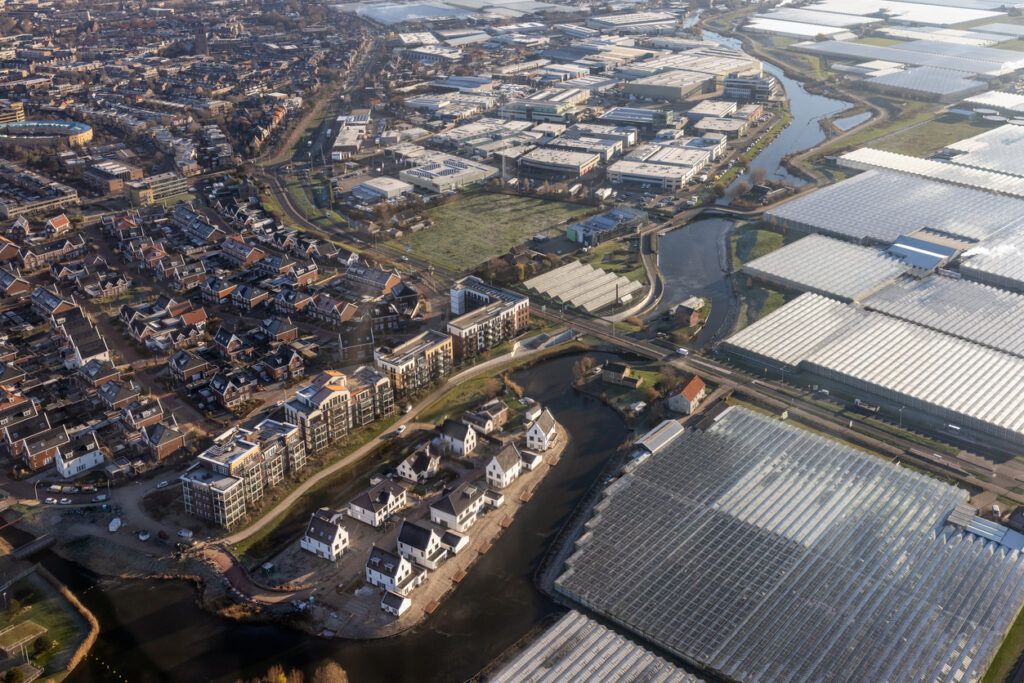
“Glass City” describes the Westland region of the Netherlands. This area contains one of the world’s largest connected greenhouse landscapes.
The region covers more than 2,750 hectares of greenhouses. It supports vegetables, flowers, plants, research, education, and technology businesses. Families live and work within this agricultural ecosystem. Students can train for careers in horticulture and greenhouse science.
You can learn more about the original concept through The Glass City project.
Westland shows that greenhouses can become more than individual farms. They can form a coordinated economic cluster.
A Glass City in Alberta would not mean building a literal city under glass. Instead, it would mean creating a concentrated greenhouse hub with shared infrastructure and shared expertise.
The hub could include:
- Modern greenhouses for vegetables and other crops
- Shared geothermal heat networks
- Water management and recycling systems
- Research and training facilities
- Packing, storage, and shipping infrastructure
- Suppliers, technology companies, and service providers
- Partnerships with municipalities, colleges, and universities
- New opportunities for Alberta’s oil and gas workforce
This model could help greenhouse operators reduce costs while improving production. It could also help government and private investors share risk.
Most importantly, it could connect Alberta’s agricultural future with its energy expertise.
Why Alberta Could Build Its Own Glass City
Alberta already has many of the required foundations.
The province has experienced growers, agricultural researchers, transportation networks, and strong sunlight. It also has established greenhouse businesses and a growing market for local food.
According to the Alberta Greenhouse Growers Association guide, Alberta’s greenhouse industry covered approximately 500 acres in 2023. The sector has also grown significantly since the 1980s.
That existing base provides a starting point. A coordinated hub could build on local knowledge instead of starting from zero.
A southern Alberta location could offer several potential advantages:
- Strong solar resources for greenhouse operations
- Access to agricultural producers and labour
- Connections to major roads and markets
- Proximity to food distribution networks
- Existing industrial and energy infrastructure
- Potential access to inactive oil and gas wells
Nevertheless, every site would require careful study. Water, land, market access, regulations, and energy resources must all align.
A Glass City should grow from sound feasibility work. It should respond to real market demand. Therefore, greenhouse operators must help shape the project from the beginning.
The Role of Heat-Only Geothermal Energy
Algar Geothermal focuses on heat-only geothermal energy. We do not produce electricity.
Our approach could repurpose out-of-service oil and gas wells as sources of renewable heat. These wells may provide existing underground access to warm geological formations. With the right engineering and regulatory approvals, a well could potentially become part of a closed-loop heat exchange system.
The system could circulate fluid through the well. The fluid would absorb heat from below the ground. A heat exchanger could then transfer that heat into a greenhouse heating network.
The geothermal fluid would not need to enter the greenhouse. Instead, the system could deliver heat through:
- Radiant floor systems
- Perimeter heating pipes
- Hot-water distribution loops
- Heat exchangers
- Forced-air heating systems
This approach could provide steady heat through Alberta’s coldest months. It may also reduce exposure to changing fossil fuel prices.
The Alberta Energy Regulator explains geothermal resource development, including open-loop and closed-loop systems. The regulator also recognizes geothermal heating for greenhouses, homes, industry, and commercial buildings.
For greenhouse operators, reliable heat could support more predictable production. It could help maintain growing conditions for tomatoes, cucumbers, peppers, lettuce, and other crops.

Turning Inactive Wells into Productive Infrastructure
Inactive wells can create long-term environmental and financial responsibilities. Owners may face costs related to monitoring, maintenance, closure, and reclamation.
Repurposing some wells could create another path.
Instead of viewing every inactive well only as a liability, we could assess whether selected wells have productive geothermal potential. This would not eliminate regulatory duties. It would add a possible economic use where technical conditions support it.
That opportunity could benefit several groups:
- Oil and gas companies could contribute existing infrastructure and technical knowledge.
- Former oil and gas workers could transition into drilling, maintenance, construction, and geothermal operations.
- Greenhouse operators could gain access to dependable heat.
- Municipalities could attract new investment and skilled employment.
- Governments could advance economic diversification and food security.
- Albertans could gain access to more locally grown produce.
This is a potential win-win scenario. It could preserve meaningful energy-sector work while creating a cleaner source of heat.
The work could also support self-respect and community stability. People who built Alberta’s energy economy may have an important role in building its next energy economy.
From Greenhouse Hub to District Heating
A Glass City could begin with greenhouses. Over time, however, the same heat network could serve other nearby users.
A cluster of greenhouses may create enough demand to justify shared geothermal infrastructure. That network could potentially expand to:
- Food processing facilities
- Agricultural buildings
- Warehouses
- Schools and community facilities
- Commercial buildings
- Residential neighbourhoods
This is the foundation of district heating.
District heating can reduce the need for each building to install and operate a separate heating system. It may also improve energy efficiency when several customers share a common network.
For Alberta communities, this could reduce dependence on fossil fuel heating. It could also keep more energy spending within the local economy.
The opportunity is especially relevant in communities with inactive wells and nearby agricultural or commercial demand. However, each location would need a detailed assessment of well condition, heat demand, distance, temperature, and network costs.
The Implementation Highway
A major project requires more than a strong idea. It needs a clear path from concept to construction.
We call this pathway the Implementation Highway. It could help governments, industry, communities, and growers move from discussion to action.
1. Gather committed greenhouse operators
Growers understand the market, production risks, and heating demands. Their participation would help define the right crop mix, scale, and business model.
2. Build a project team
The team could include:
- Greenhouse operators
- Algar Geothermal
- Oil and gas well owners
- Engineering and construction partners
- Municipal leaders
- Indigenous communities and organizations
- Agricultural researchers
- Alberta and federal government representatives
- Potential heat customers
3. Select a site
The project team could shortlist locations based on:
- Geothermal potential
- Inactive well access
- Water availability
- Transportation routes
- Market demand
- Utility connections
- Municipal support
- Landowner relationships
4. Complete a feasibility study
The study should test technical and commercial conditions. It should examine the geothermal resource, greenhouse design, heat demand, operating costs, environmental requirements, and customer commitments.
5. Secure funding and de-risk the pilot
Government participation could help reduce early-stage risk. Grants, loan guarantees, and research support may encourage private investment.
Alberta’s Growing Greenhouses Program demonstrates policy support for year-round controlled environment agriculture. The program’s application period is currently closed. However, its eligible categories show clear alignment with efficient energy, energy-saving construction, engineering, automation, and training.
Future programs could potentially support shared geothermal infrastructure. Federal and provincial cooperation would be especially valuable for a first-of-kind pilot.
6. Build, measure, and improve
Algar Geothermal’s primary goal is to complete a southern Alberta pilot in 2026. No active Algar geothermal project exists yet.
The pilot could test the complete model:
- Repurposed well infrastructure
- Heat-only geothermal production
- Greenhouse heating
- Local food production
- Workforce transition
- Community participation
- Measured emissions and operating costs
The results could guide future projects across Alberta.
A Practical Opportunity for Alberta
The Glass City concept brings several priorities together. It connects food security, energy security, economic diversification, and environmental responsibility.
It could help farmers grow more food. It could help communities attract investment. It could help oil and gas companies repurpose infrastructure. Furthermore, it could create new careers for experienced energy workers.
The Netherlands offers a useful benchmark. Alberta does not need to copy Westland. We can build a model suited to our climate, geography, markets, and energy strengths.
Our opportunity is to use Alberta’s own resources and expertise. We could create a greenhouse economy powered by renewable heat from below the ground.
The first step is practical engagement. Greenhouse operators, well owners, municipalities, governments, researchers, and local communities can begin identifying suitable sites and customers.
Could Alberta’s first geothermal greenhouse pilot become the beginning of our own Glass City?
Contact Algar Geothermal to discuss the opportunity. You can also explore our perspective on Alberta’s greenhouse revolution and the case for a geothermal greenhouse pilot project.